

2 weeks ago I was listening to Tim Fletcher’s videos on trauma and very quickly I started to realize just how traumatized I had been from my upbringing 40 years earlier. If you know anything about me, you’d know I’ve been listening to and reading up on mental health and trauma for years. I studied psychology in High School (and then college) originally thinking maybe I would be a psychologist one day. Major changes occurred in college for me, including the death of my mother, and I went into web design1 after.
How did you not know you had been traumatized?
Prior Knowledge
First, I knew about some stuff. I obviously had issues stemming from my father being absent most of the time, the divorce, and his caring about what others think (looks) over authenticity and comfort. I had issues from strict caregivers who were not my parents. And with my mother dying when I was in college, that made things much worse for me. I had trouble with dad not respecting my privacy as well2. And I knew that being left alone a lot of the time was not the best decision on the part of my parents. It led me to being afraid of my brother attacking me and not being able to defend myself, because that happened. A child living in that environment will become hypervigilant of dangers.
What Triggered This NEW Comprehension?
Tim Fletcher created a video series on all the various signs that someone who had been emotionally neglected might have now that they are an adult.
I had way too many of them… I was overwhelmed after hearing his video list. He mentioned the book, “Running on Empty: Overcome Your Childhood Emotional Neglect3,” which I quickly purchased and read Part 1 (Running on Empty) and 2 (Out of Fuel) and could see that a majority of the ways one would be “Running on Empty” happened to me in various ways (I had a perfect storm, see below), and I had all the signs of being “Out of Fuel” as an adult.
What I Did NOT Comprehend ‘Til Now
The MAGNITUDE of blaming myself
As a 40+ year old woman, I could see things in my past didn’t put me on a great trajectory so I made stupid decisions as a young “adult” which compounded my issues. And I blamed myself, a lot. I thought those were my mistakes; “I should have known better” (though who would have taught me better?). “No Compassion for Self, Plenty for Others” is one of the signs of being emotionally neglected. Another is guilt and shame and also, “Self-Directed Anger and Blame.”
Are you noticing a pattern yet? I was taking on way too much responsibility and then being upset with myself for failing. Is it any surprised that as an adult trying to work through things, I’ve taken an interest in (and have written a lot about) responsibility shifting?
Before this realization a couple of weeks ago, I’ve been dealing for years with the fact that I did take on too much responsibility as a child. (Children do that when they feel powerless, because it gives them a sense that maybe there will be something they can do to protect themselves). I learned that I would take on too much responsibility when I started to study the Drama Triangle and saw that I would take on the “savior” role a lot in my past.
So, yes, some of it I realized, but after seeing all of the adult signs listed out and how much they apply to me, it hit my like a ton of bricks. I knew some. But I had no idea how completely it had damaged my life and who I am today.
Our Memory Recording Problem
One problem with emotionally neglected children is a lack of childhood memories. It could be so painful to reach out to your parent and be rebuffed every time or made to feel ashamed for having an emotion or a need. The brain stores the memories differently or blocks them out to protect the child.
The problem with recognizing abuse is that the child may have a lot of past experiences of emotional neglect but have no memories of them, or have memories of them, but from an emotionally-detached perspective because the brain records it differently.
And, then, the other memories are of the few times when parents were around, so looking back, an emotionally-neglected child can have more conscious memories of “good times” supposedly proving they had good, or at least well-intentioned, parents, little to no memories of being emotionally neglected, and memories of being neglected but stored logically (detached from the emotions that originally arose). All of that makes it much easier for an adult of Childhood Emotional Neglect (CEN) to not realize it.
What Didn’t Happen But Should Have
The major reason I did not understand this was because the trauma that I am discussing is from what did NOT happen to me that should have. Without enough visual, physical, or verbal abuse, I could not see (comprehend) that trauma happened.
If I had been physically abused, it would be easy to say, “Of course I’m traumatized because I got hit a lot.” If I had my physical needs neglected, such as parents not feeding me or keeping a stable roof over my head, I could easily see neglect (of that sort) would traumatize me. If I had been yelled at daily, of course I would see that it would affect me. All of these things are very visible and you can see clearly they should not happen in a loving family.
But, if something does not happen that should have, it’s invisible (especially to a child who knows no differently) and goes undetected and could even be mocked by others who don’t understand how much of an effect a neglect in that area could have. Mocking someone who has been physically abused would seem cruel, but mocking someone who had been emotionally neglected could be seen as “not a big deal.” If you told someone, “My parents didn’t care if I came or went,” people with overly-strict parents might wish they had those parents and minimize the damage it would cause.
The book by Jonice Webb, PhD (and Tim Fletcher in videos) describes how being spoiled and/or left alone to do whatever you want negatively impacts you. Having a “Permissive Parent” is one of the 12 ways to wind up empty according to the book. And, that happened with me as well. It can lead you to feeling as if you’re not worth being parented and leads to not being able to evaluate your strengths or weaknesses and not working on yourself to live up to higher standards, which can make it difficult to finish tasks when you grow to be an adult.
If your parent didn’t require you to learn how to emotionally deal with things you don’t want to do, when you get bored as an adult, it can make it more difficult to require yourself to do things when the tough gets boring. I do have a major problem with starting things and not finishing them.4 There are many more examples. I love that the book gets into those because seeing how the neglect turns into negative coping signs was a huge deal for me. It was the missing piece for me to accept that the neglect did have a big impact.
The Perfect Storm
With my dad living in another house as I grew up, and my mother working, I was raised in a diverse environment in some senses. One way in which is was not diverse was gender. I was raised by women.
I’m going to write about the book’s “Twelve Ways to End Up Empty” from my personal perspective. Obviously, I recommend the book and Tim Fletcher’s videos on Emotional Neglect.
1: The Narcissistic Parent
Narcissists want to look good, no matter the cost. I have written about how they don’t feel like they measure up and have an insatiable desire for narcissistic supply. This is why they have a preoccupation with looking good; it’s to hide their “Fatal flaw” that supposedly made them unlovable5.

Here is a quote from Running on Empty, “Narcissistic parents don’t really recognize their children as people separate from them. Instead, they see their children as little extensions of themselves. The needs of the child are defined by the needs of the parent, and the child who tries to express his needs is often accused of being selfish or inconsiderate.”
I have many memories in my childhood about Christmas gifts. I even wrote in school about one Christmas gift incident, concerning which the teacher pulled me aside and said it was very interesting, as she hadn’t considered what that would feel like to a child. The theme between that and the next memory is that my emotional need in the moment was overlooked so that my parents could look good in front of others.
The Doll Gift
You may want to dismiss this. And, that’s really what I did to myself for years. But, I believe there was a correct way to handle this and an incorrect way to handle this, and they handled it very incorrectly.
I was given a doll by someone, I think it was a friend of the family. I opened it, was disappointed, and I think I was going to move on to opening another present without saying anything when I was told to say, “Thank you.” I know that seems like a reasonable thing to ask your child to do in that situation. It was also asking me to lie. Would you want a lie told to you? What about the Golden Rule?
Lying about Gratitude
To say, “Thank you,” by definition is to express gratitude for a gift. I had zero gratitude. The reason for that was because I did not like dolls. I have a feeling I did not like dolls at this point, because I did not like babies, because I felt babies were too emotional and weak (they showed too much feeling, the sort of thing I was rejected for and thus rejected in myself). But that’s not the point here.
The point here is that I did not like dolls. I had no desire for a doll. It was a stupid, thoughtless “gift,” that proved to me that this person does not know who I am authentically and did not take any time to learn who I was and certainly did not deserve thanks. [Thinking back, it could be that he may have asked my dad (who was away a lot) what I might want, or if I would like it, and maybe it was my dad who did not know my wants or desires. I don’t believe this is a case, because I think it was a friend of my mom’s not my dad’s. But I’ll leave the possibility open.]
Yes, I still highly judge people about whether or not they deserve thanks by if they spend any time thinking about the gift receiver’s wants and desires. What on earth is the point of giving a gift that will be thrown away? I would much rather not receive a gift from someone than receive a thoughtless gift.
And, I highly judge that because I have an unmet need to be seen authentically and to have my desires taken into mind. This was not the only time it happened. It was chronic. Which is why I am learning and accepting that this is Complex Trauma, not just PTSD, but CPTSD. The real authentic me was rejected, so people never got to know the real me and that was a vicious circle. I’m still attracting people who do not get to know me authentically. But, thankfully, I am getting better with this as I get to know myself more in-depth.
I am understanding about how a parent could ask a child to say, “Thanks” to smooth things over in a party and then discuss LATER the fact that they were asking me to lie to others in order to not look like assholes. That would have been honest of them.
What I would have hoped for would be for my parents to care that I did not want to lie and to care that I was not being seen authentically and to care about my emotional needs. If they could have expressed that they saw it was difficult for me and that they would try to make sure I had those needs met in other ways, the memory that I would have kept would have been that talk between my parents and I, not the requirement to say, “Thanks”.
Instead, their lack of care compounded the issue. Not only had this person not seen me and cared about my desires, but my parents didn’t either. I learned from this incident and many more that it doesn’t matter how I feel I just need to forget my feelings and lie so we look like good moral people… oh, lying to look moral. Nice! /sarc
So, I did learn over many incidents that my needs and feelings were inconsiderate and it mattered more to make my parents look good than to get my needs met. I don’t think of my mother or father as narcissistic, but I can see how they both cared more about me looking good than actually feeling good. I definitely felt like they both saw me as extensions of themselves, rather than a separate individual person.
Narcissism ✓
2: The Authoritarian Parent
I do not believe either of my parents were authoritarian. However, I had a strict Scottish grandmother who was. She threatened spankings and putting soap in mouths. She would roll up newspaper or magazines and swat dog’s bottoms. I think that stuff happened with my brother, but he was the one who would act out. I had already learned to “behave,” when my memories start.
She would say to her cats later in life, “That’s not lady-like,” if they were laying sprawled out on the floor showing their “privates” to the world. She also called me, “little lady,” when I was younger, and I can hear it in a threatening tone. It was used to remind me that I was supposed to be a young or little lady, but wasn’t being one just then… So I assume that my emotions like anger, probably got the response, “That’s not lady-like” from her. I was shamed for having feelings of anger, so I repressed them.
Later in my young teens, after moving away from where my grandmother lived, my mother had a “friend” watch us. She was just as authoritarian, or worse than my grandmother. She was verbally abusive. She would say I had no common sense. I walked around on egg shells. I learned that no matter how much I could try to predict what would set her off, I could not always do it.
I had a lot of good analytical skills and I’ve got a good IQ (I’m in the 115-130 range). I can predict things well. But I have learned some people just want to be angry and will use anything as justification. But I did NOT know that as a child. I blamed myself. There was one incident that I thought through completely and did my best, but she still got angry, and I realized that I could not stop the anger… but still blamed myself for not thinking of a solution, rather than realizing the whole situation was wrong in the first place.
Authoritarians ✓
3: The Permissive Parent
When I was younger, my mother couldn’t watch us while working and my grandmother did, but she wasn’t around all the time. My brother attacked me (acting out because he grew up in the same environment I did, just reacted differently). The other authoritarian “friend” was not around all the time either. When we were young teens we could be left home alone. My brother and I grew up “feral” in a way.
One example in the book about permissiveness was a child asking to not go to school and the parent saying, “Sure, no problem.” I did that with my mother. Although the example in the book was about a child running away from tests, I was a perfectionist and would only take off if I knew it would not be a test day. It had to be something I could miss without issues.
A quote from the book, “Another pitfall of having permissive parents: the child doesn’t get enough feedback from her parents. She is left to figure out for herself what she can expect from herself: what she’s good at, what her weaknesses are, what she should strive for.”
I was told that I was smart. But, as I mentioned before, I was told that I had no common sense. It was said that I was well-behaved, but that was because I was always people-pleasing (fawning) to avoid danger.
I wanted to learn more about psychology and be a psychologist (another sign of emotional neglect), but in an interview with one (for my High School psych class report), I was told because I was an introvert I would not make a good psychologist. I know as an adult that’s not true, but it was very much the reason why I stopped striving towards that goal. Not having any mirroring about your weaknesses (to know what to work on and to learn how to work on them) can lead to not knowing what you want to do. This all can lead to “Unrealistic Self-Appraisal.” From the book:
Signs and Signals of Unrealistic Self-Appraisal
it’s hard to identify your talents
you sense that you may tend to over-emphasize your weaknesses
it’s hard to say what you like and dislike
you’re not sure what your interests are you
give up quickly when things get challenging
you chose the wrong career or changed several times
you often feel like a “square peg in a round hole, ” a misfit
you’re unsure what your parents think (or thought) of you
I feel that way a lot. And I still get shocked when I hear my dad talk about what he thinks of me in the random moments he does talk about it. A lot of parents can focus on not building up a child (concerning their strengths) so they don’t get conceited, and then focus solely on issues that need improvement, which leads to a child over-emphasizing weaknesses and having no idea what their strengths are.
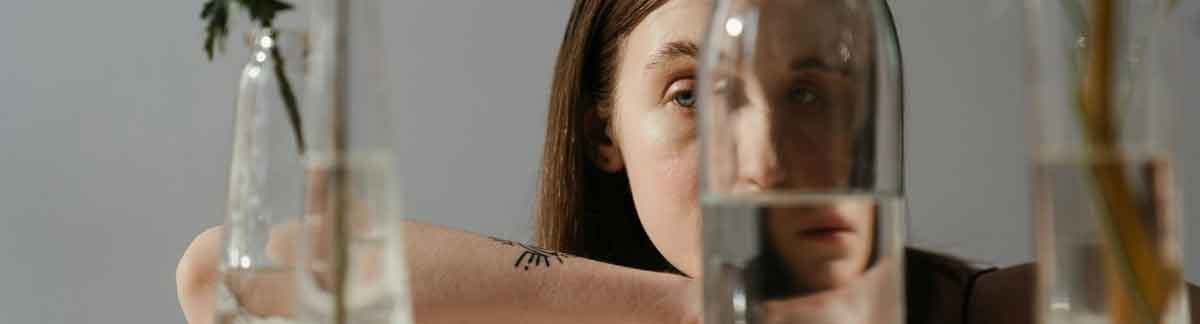
Your parents are supposed to be mirroring back to you an accurate reflection. But in these cases an emotionally-neglected child is looking into a distorted (fun-house-like) mirror with their parent’s reactions. This makes it so that when you hear an accurate reflection (someone praising your talents), you think that there is something wrong with that person. You don’t consider that you grew up in a “funhouse”.
Permissiveness ✓
4: The Bereaved Parent: Divorced or Widowed
My mother got divorced from my father. My dad remarried pretty quickly afterward and had another family, but my mother never got into another relationship (that I was aware of anyway). I do believe my mother was bereaved about that. I recall her singing well the song, “Love, or Let Me Be Lonely.”
After reading and listening to videos, I think that there is a chance she was bereaved about the miscarriage before having me. One video in particular said that if a parent loses a child, and that parent does not know how to grieve, he or she can lock the heart down, get cold and distant, and not want to be emotionally attached to other children again… to protect from the emotional loss of another death. My mother told me she prayed for me to be healthy because the first daughter died (miscarriage). It is possible that she was afraid of becoming emotionally attached to me out of fear of loss again.
My mother was very close with her sister growing up. They had the same taste in music. When I went through the vinyl records it was not uncommon to see the same record twice, one with her initials and one with my aunt’s initials. When I was not yet a teenager, my aunt died. My mother likely took it very hard. As a child, I did not have that perspective to pay attention to see that. But I think that’s the case.
I’ve listed a potential of three ways in which my mother could have been bereaved. A parent overwhelmed with grief cannot be there emotionally for their children. Parents can grieve healthily. But I don’t believe my mother did.
Bereaved Parent ✓
5: The Addicted Parent
My mother did smoke pot. I’m sure plenty of pot smokers will say that’s not that bad. I’m not going to say it was the most important thing here, but she did smoke while driving the car. She would take a hit at a stop light, bending down to do so out of the sight of the windows.
I recall a time when I was left alone in a running car at night in an unknown neighborhood, listening to music on the radio, for what may have been an hour or more. I lost track - it never occurred to me that we would be there longer than 2 or 3 songs. She was inside the house. I have no idea what she was doing. But it was neglect. And now, I wonder if she didn’t go to pick up drugs, start talking or doing them, and forgetting I was in the car. Maybe she remembered but lost track of time. Who knows?
She would also play video games when home, rather than eating dinner around a table with the family. We were around together at times, but not actually present, ya know?
I know that she went to the casino in the middle of the night while my brother and I were left home alone as well. Is that a gambling addiction? We were teens probably able to handle ourselves fine if something happened. But is that healthy? I don’t think so. I don’t know that it was about the gambling so much as getting away from us to relax from the pressure of being responsible for us.
My dad drank a lot. I have no idea if it was an addiction. I never noticed him acting differently from it. Just noting it happened. There was always alcohol around regardless of what house I went to.
Addicted Parent ✓
6: The Depressed Parent
My mother told me when I was around 20 years old that she was “tired” and just wanted to go home (meaning heaven). I know when she was diagnosed with cancer she was also on anti-depressants in the end. My guess is this goes along with the bereavement.
Depressed Parent ✓
7: The Workaholic Parent
My father being out of town on business from Monday to Friday sure counts. But even when he was around he is always doing something. He cannot just relax for too long, no matter what it does to his health.
In my early teens my brother, mother, and I lived in an apartment, with not enough rooms for all of us. She moved into a town home, but got another job to help pay for it. To me, I felt like she got the other job to get away from us more. I kept thinking we could be in an apartment (albeit one with another room), for cheaper than the townhome, and she wouldn’t have to be working so much. I know she can say she that to give us a better life, but was it really better if it didn’t include her?
Workaholic Parent(s) ✓
8: The Parent with a Special Needs Family Member
I won’t call my brother “special needs.” He acted out because we grew up in this family dynamic. But because of his acting out they spent time taking him to therapists to figure out what they could do. He was diagnosed with ADD (which can be a symptom of trauma and I probably have a bit of that myself). The reason why this is on the list is because when one child needs to be focused on, the parents often minimize the needs of the other children. So mine were likely minimized (she is not acting out, so she’s “fine”).
Minimization of my needs because others’ trump it ✓
9: The Achievement/Perfection Focused Parent
My mother was not perfection-oriented. But my dad focused on it. When I brought home a report card with all As and one B, I was not praised for the As, I was asked, “Why didn’t you get an A?” in that B class. I am now a perfectionist myself.
Perfection-Focused Parent ✓
10: The Sociopathic Parent
This is the one I don’t believe really applies to me. If it does, it’s the “care-taker” “friend” of the family whom I could never please. But, she apologized later, so I don’t really think this one applies for me as sociopaths don’t apologize unless it’s a manipulation tactic.
11: The Child as Parent
This is about parentification. I was parentified. As my mother would go out to the casino in the middle of the night, I was the one waking up early so that I could get ready and make sure my mother and brother were awake so we could get to school on time. My mother didn’t care that I was now parenting her in the morning. That didn’t seem to make her want to stop spending her night at the casino. At least from what I saw/experienced.
The Child as Parent ✓
12: The Well-Meaning-but-Neglected Themselves Parent
I highly doubt my parents were anything but well-meaning. My mother told me she prayed for me. She was happy with me and decided to get pregnant again and have my brother. They intended to have a family. It was not an accident. My dad still cares for me. I just spoke with him this morning. I know he means well.
I am sure they tried to do their best, the way they knew how to. I don’t know that I would count this as a separate number as it is in the book. But maybe it’s the catch all for the other parents who didn’t fit the mold of the previous 11.
Well-Meaning Parents ✓
Conclusion
I’m not sure how many children can say they grew up with authoritarians and permissive parents. Maybe some children get that with a submissive mother and authoritarian father, but if that is the case, usually the mother would defer to the father’s rules even in his absence. In my childhood my environment was drastically different depending on who was in the house (or apartment) when I got home, or who was walking in unexpectedly. And, although my father’s household may have been more stable, it wasn’t where I felt comfortable because I spent most of my time elsewhere and couldn’t bring all my belongings with me.
This is why it’s a perfect storm. I didn’t just get one situation that could cause emotional neglect. I got almost all these situations that can cause it, and it messed me up royally.
The book is great going through examples of clients and how the childhood experience manifested for them in adulthood. I love seeing how that happens. After checking off so many of them, and way too many of the signs of an emotionally-neglected child, I basically have no way to refute that this happened to me.
With the cognitive dissonance of seeing my parent’s well-meaning intentions (and what went well) but feeling as if something was off, I thought the something-off-part was me… I blamed myself. But after looking into this, I can have no more doubts that the way my parents emotionally neglected me affected me way more than I ever thought possible. It’s great to put words to it. But it’s also maddening.
I felt a lot of pent up anger and I’m more likely to cry. I’m emotionally raw right now. And, I can see that they were likely well-meaning and had no idea what to do. The anger is free-floating. Usually I’m angry at myself, then it’s them, but maybe it’s at those who made them that way as well. I have a difficult time just being angry at a person, and rather just feel overwhelming anger that has no where to go. I guess I attempted to transmute the energy into this piece of writing for now.
I am sorry I haven’t been able to write more frequently. It’s busy at work. Christmas Eve was the busiest of times (working at a church). Lent/Easter will probably be a bit busy as well. But I’ve also felt a bit like an imposter. How do I write about how to feel better emotionally when I’m falling apart? (That’s one of the signs of emotional neglect as well).
I know that what I wrote here will be interpreted many different ways. Some will want to complain (because some people like to be angry no matter why). But I also realize some people will find help with it. I don’t have to be perfect to be helpful. I’m attempting to learn that as well.
Merry Christmas and happy new year, all.
Knowledge is power, and I hope you’re filled with it and I hope I helped a little.

BTC Donation Address: bc1q4s6h8rhyqawqlz46ppc3zc5v43duycp8m57h9p
But if y’all know me from reading here, you’ll also know I’m not working in web design. I still do some for friends and family, and did create (and do update) the website for the church I work at, but that’s certainly not my job title.
This is an odd one because on one hand my mother was very permissive and my father was absent, neither one seemingly caring about my inner thoughts/world, but as I grew and my mother died, my dad broke into my computer and read my supposedly “private” thoughts as a young adult.
That is an affiliate link on Amazon which can help the Substack out. I highly recommend this book if you think it might be something you went through.
If there is enough pressure and someone else will judge me if I don’t get it done, I will get a task done, because my fear of being judged as not perfect will fuel me. But if it’s something I personally would like to do (like write a book), but it gets boring, and I know no one else will judge me, I find completing boring tasks very difficult.
The “Fatal Flaw” is a sign adults show when they were emotionally neglected as children. Narcissistic parents often pass that onto their children because they don’t know how to emotionally nurture their children because they were never emotionally nurtured as children.
👍 Though "dysfunctional" and "families" are kind of joined at the hip, even if some are worse than others -- Manson's for example.
But reminds me of a classic case, of a book I have on my bookshelves, "Running With Scissors". Something of a gift from one of my siblings if I remember correctly -- maybe they were trying to tell me something ... 😉🙂